


Children Grieve Too
When we think about grief, we often picture adults. But grief is not reserved for just us grown-ups. Children grieve too.
The tricky thing about grief in children is not only may it be delayed, it also may not look like adult grief. Children, especially the younger ones, don’t always have the words to describe what they’re feeling. Instead, their grief might present as:
Regression– they might return to earlier behaviours like bed-wetting or wanting a comfort toy/dummy again.
Acting out– changes in their usual behaviour, mood swings, frustration, irritability, tantrums, and sometimes even withdrawal.
Anxiety or heightened fears– especially when having to separate from parents/loved ones, like at childcare/school drop off.
Questions about death or where the person has gone– usually asked over and over again!
All the above can be extremely challenging for the adults, especially while navigating grief themselves, but it’s important for us to realise that our children aren’t trying to be annoying – they’re just trying to understand what has happened. We know how hard it can be for us to process grief and loss – can you imagine how much harder it would be for children who not only have less of a grasp on their emotions, but also less vocabulary to be able to express themselves?
Our oldest was 5 years old when we lost Dorian, but even though he understood the concept of death and would have the vocabulary to talk or ask questions about it, he still had trouble processing everything that was going on. I shared in an earlier blog post about how he went through cycles of asking questions and wanting to talk obsessively about Dorian and my previous miscarriages, to shutting down completely and acting silly whenever we tried to talk to him about Dorian or his feelings. Even now, a year later, he’s still processing and we’re still trying to get him to open up about it.
Meanwhile, our middle son had only just turned 2 when Dorian passed, so it was a huge struggle for us trying to explain what had happened as he had no idea what death or heaven even meant. He went from confusion and asking if Dorian was sleeping or had gone somewhere, to associating all sadness and crying with Dorian just from watching us grieve. Then as time went on, he started wanting to cuddle his picture of Dorian to sleep, and sometimes he would wake up in the middle of the night crying and asking for Dorian to come back. But we didn’t realise how much he was able (and still trying!) to process grief until just before his 3rd birthday.
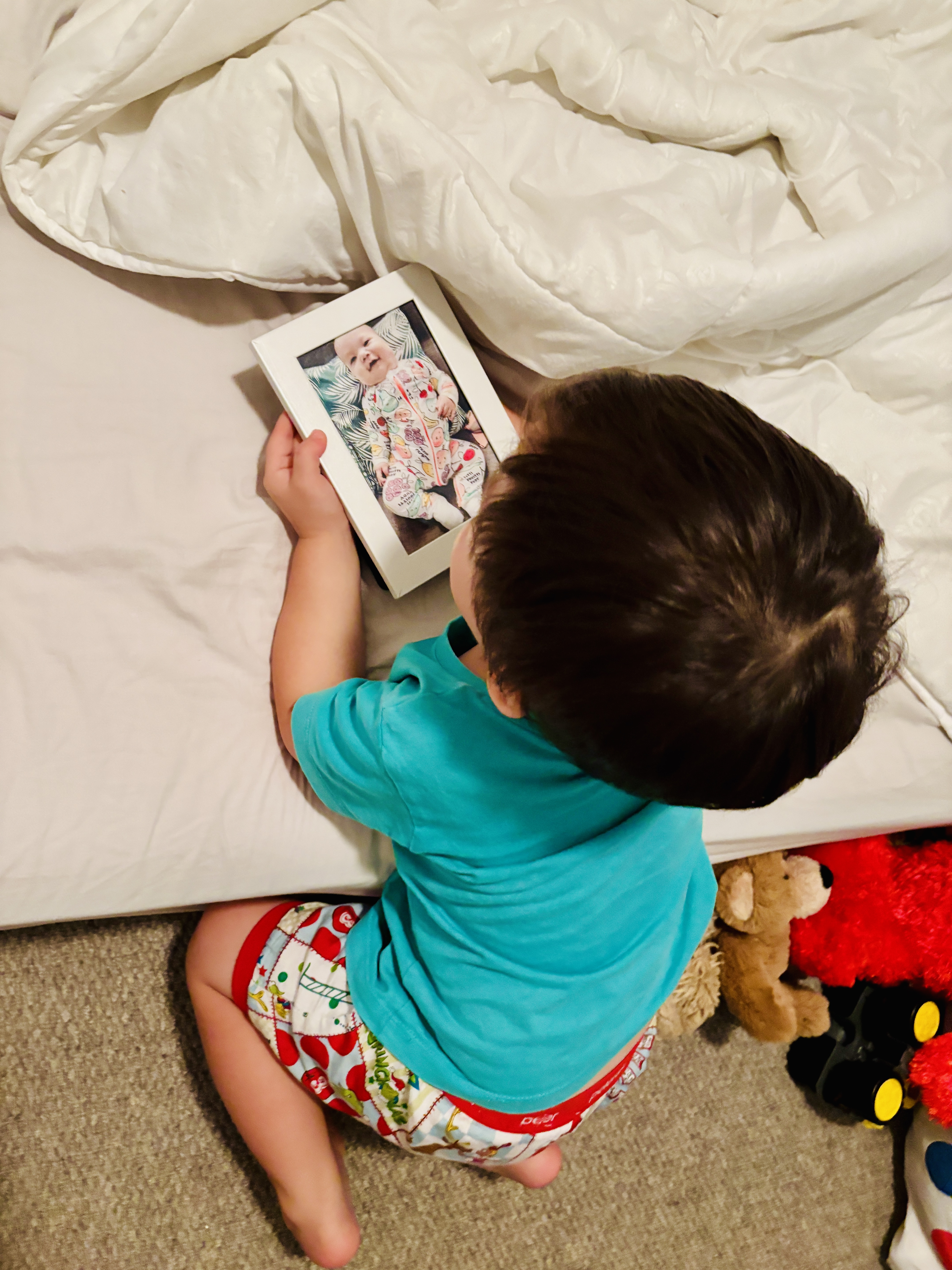
As we were tucking him into bed one night, he was asking his usual questions: if Dorian could come back and if heaven was too far away for us to see him. But this time, he had another question that he’d never asked before: he asked, as if double-checking, if we saw Dorian with the doctors. It took me a moment to realise he was asking about the night Dorian passed away in hospital. It had taken about a year for him to build up the comprehension, ability, and vocabulary to voice his confusion, and ask a question to try and process what happened that night.
Make no mistake: children, and their little hearts, can feel the weight of loss deeply. Their grief is not “smaller” than ours – it’s simply different. But how do we support and help them when we barely know how to help ourselves? There’s certainly no rulebook for this, but these are some the things that we tried with our boys:
Be Honest, In Age-Appropriate Ways
Avoid vague phrases like “gone away” or “sleeping,” as these can be very confusing, and may even create fears, especially in younger children. They’re going to find out at some point anyway, so I’d suggest using gentle but truthful language to explain what happened, eg “They died/passed away, which means their body isn’t working anymore” and/or “They’ve gone to heaven, so we won’t see them again until we get to heaven too.”
Make Space for Feelings
Let them know it’s okay to be sad, angry, or confused. A great way to back this up is to model healthy grieving by sharing your own emotions in a way they can understand. We also wanted to make sure they knew that it was safe for them to talk about Dorian whenever they wanted, so we say his name and often include him in our family affairs, eg birthday gifts and little notes “from Dorian”, telling them that we miss him too, etc.

Give Them Creative Outlets
Our counsellors advised that because grief presents so differently for kids, creative outlets like art, play, and storytelling can help them express what’s in their hearts when words might fail. Drawing pictures of the person they lost, making a memory box, writing a letter, or even planting a flower garden can all be healing activities.
Keep Routines Where You Can
In the midst of the loss and confusion, familiarity can be comforting. Their emotions will already be heightened as they feed off yours, so keeping to their regular bedtimes, mealtimes, and school/childcare drop-offs can help them feel secure. We found that it also helped us to focus and keep going when we had a routine and schedules to follow.
Remember Grief Comes in Waves
Just like us grown-ups, children may seem “fine” one day and deeply sad the next. Their understanding and feelings about the loss may also resurface as they grow older and reach new stages in life (like in the case of our middle son). All you can do is let them know that you are there for them, and comfort them in whatever way they need.
There’s certainly no “right” way to handle children’s grief, but they don’t always need the “right” words or actions from us. The most important things are that they need to know we’re there for them, and that we not only model, but encourage healthy expressions of grief. They need to learn that it is okay to feel, and that grieving doesn’t mean that there’s something wrong with you.
We will never be able to take away their loss, but we can walk alongside them as we all learn to carry it together. And in doing so, hopefully we will teach them one of life’s most important truths: love doesn’t end when someone dies, but we carry them in our hearts forever so we’re never truly apart.